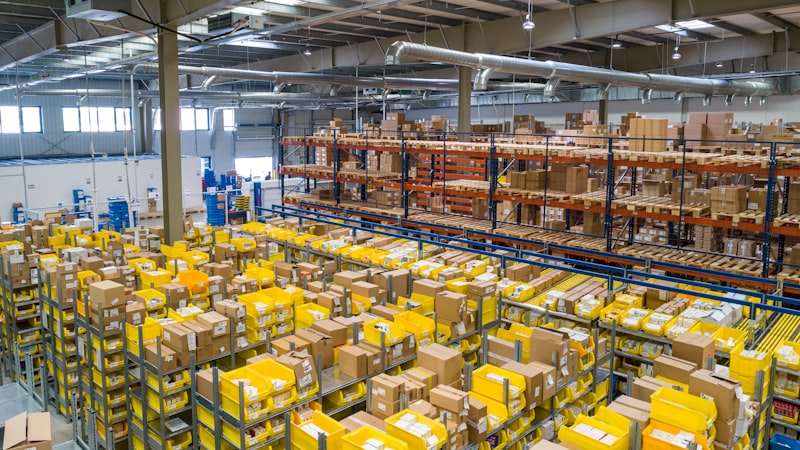
The moment I realized our inventory system was broken wasn't during a crisis meeting or when the CEO called—it was at 2 AM watching our warehouse manager manually count boxes while our warehouse management system insisted we had 340 units of a SKU we'd actually sold out of three weeks ago. That image stuck with me for years.
Here's the uncomfortable truth: most e-commerce businesses are making inventory decisions based on data that's 24 to 48 hours old. In a world where customer expectations change by the hour, that's not just inefficient—it's leaving money on the table.
The Hidden Cost Nobody Talks About
Most blogs will tell you that inventory management is about "stock optimization" or "reducing carrying costs." Sure, but they're missing the real damage: the customer who couldn't buy what they wanted, the marketplace seller rating you lost, the supply chain bullwhip that forces you to overstock in one category while running out in another.
According to the Council of Supply Chain Management Professionals, poor inventory visibility costs retailers approximately 8-10% of annual revenue in lost sales, excess stock, and operational inefficiencies. For a mid-sized Vietnamese e-commerce company doing $2 million in annual revenue, that's $160,000 to $200,000 walking out the door.
But here's what keeps me up: this is entirely preventable.
The Vietnam E-Commerce Context (Yes, It's Different)
If you're running an e-commerce operation in Vietnam, you're dealing with a unique beast. Our market has explosive growth—e-commerce is expected to reach $20 billion by 2026—but we're also dealing with:
Multi-channel fragmentation: You're selling on Shopee, Lazada, TikTok Shop, your own website, and maybe even Facebook. Each channel reports inventory differently and on different schedules.
Share this post
Related Posts
Need technology consulting?
The Idflow team is always ready to support your digital transformation journey.
Logistics unpredictability: A supplier in Hà Nội might deliver in 2 days or 8 days depending on traffic, weather, and which warehouse they're picking from.
Seasonal demand spikes: Tết buying is completely different from summer, and most static inventory systems can't adapt fast enough.
The businesses winning in Vietnam aren't using the same playbook as US retailers. They're building adaptive systems.
Real Integration: Where Systems Meet Reality
Let me be specific about what works. A successful system doesn't live in one place—it's integrated across your supply chain.
Connect your:
1E-commerce platforms (Shopee's API, Lazada Integration, your website's backend) to your central inventory hub
2Warehouse management system (WMS) to your forecasting engine
3Accounting software (hopefully you're using QuickBooks or similar) to track true inventory costs
4Supplier systems (EDI, APIs, or at minimum regular data feeds) for inbound visibility
When these systems talk to each other, something magical happens: you stop making decisions based on partial information. A returned item in Hà Nội automatically updates stock. A supplier delay triggers an automatic alert. A seasonal trend gets flagged before you've over-committed to inventory.
The tools that actually work here include Shopify Flow for platform automation, Netsuite for larger operations, Zoho Inventory for SMEs (it's surprisingly solid in Vietnam), and dedicated WMS solutions. But the tool is almost secondary—what matters is that data flows without human intermediaries.
The Forecasting Problem That Won't Go Away
Here's what experience teaches you: forecasting is often wrong, but it's only wrong in specific, predictable ways.
Most e-commerce managers use simple historical averages. If you sold 100 units last March, you plan for 100 units this March. But you're not accounting for:
Trending products: That item was featured on a TikTok influencer's livestream two weeks ago—sales are about to spike 300%
Seasonal patterns: Your Q4 inventory needs are nothing like your Q2 needs
Platform algorithm changes: Lazada changed their recommendation algorithm, and suddenly products you thought were stable performers are selling 40% less
The practitioners I respect use a blend: statistical forecasting (like exponential smoothing) for baseline demand, supplemented with leading indicators (TikTok trending, influencer partnerships, platform announcements). Some are even experimenting with AI-powered demand sensing—not because it's trendy, but because it actually reduces forecast error from 25% to 8%.
One critical insight: safety stock is not "extra inventory"—it's insurance against forecast error, and you should know your error rate to calculate it properly. If your forecast is typically off by 15%, your safety stock should be sized accordingly, not guessed at.
The Automation That Actually Matters
Automation in inventory isn't about robots (though some fulfillment centers are getting there). It's about removing the decisions that don't need human judgment.
Set up automatic reorder points: If SKU X drops below 50 units and lead time is 14 days, automatically trigger an order. Set dynamic pricing rules: If inventory of Product Y exceeds target by 25%, automatically reduce price by 8% to accelerate turnover. Build low-stock alerts that notify your team before you run out, not after.
The Vietnamese businesses scaling fastest aren't the ones with the fanciest systems—they're the ones where a warehouse manager can spend their day solving problems, not counting boxes.
The Mistakes I've Seen Cost Real Money
1Not factoring in returns: You forecast 1,000 units, and plan staffing accordingly. But 12% will be returned—that's 120 units you didn't account for
2Ignoring dead stock: That product from three months ago that nobody wants? It's still taking up warehouse space and costing you money
3Centralizing inventory when you should distribute it: Sometimes having backup stock at two smaller warehouses beats having it all in one location
4Trusting your gut over your data: "I just feel like we need more of this" has no place in inventory planning
What "Smart" Actually Means
Smart inventory management isn't about having the most sophisticated system. It's about having real-time visibility, automated decision-making at the edges, and the ability to adapt when reality changes.
It's knowing, at any moment, how much inventory you have across all channels, where it physically sits, when it arrived, what it cost, and what demand pattern it's following. Then, it's having the rules and tools in place to respond faster than your competitors.
For businesses in Vietnam specifically, it's about building systems resilient to our market's unique challenges—multi-channel complexity, logistics variability, and the sheer speed of growth.
---
If you're building the operational backbone to support this kind of inventory intelligence, tools like Idflow Technology are designed exactly for this—connecting your supply chain data, automating decisions, and giving you the visibility that actually matters. The best system isn't the most complex; it's the one that scales with your business and talks to every part of your operation.
The question isn't whether you can afford smart inventory management. It's whether you can afford not to have it.