# Conversion Rate Optimization for E-Commerce: The Gap Between What You Think Works and What Actually Does
I watched a client spend $50,000 redesigning their checkout flow last year. They hired a fancy agency, got beautiful mockups, A/B tested extensively, and at the end of it all? Their conversion rate dropped by 0.3%. The redesign looked stunning. The data was a disaster. That taught me more about CRO than five years of reading case studies.
The dirty secret of conversion rate optimization in e-commerce is that most practitioners are solving for the wrong variables. We obsess over button colors and form field labels while ignoring the 200-pound gorilla in the room: buyer psychology doesn't scale the way we assume it does.
The Real Problem Nobody Talks About
When you're sitting in a Southeast Asian market like Vietnam with growing e-commerce, you run into something fascinating. The same checkout page that converts at 3.2% for Shopify stores in the US converts at 1.1% here. Is the strategy wrong? No. The context is completely different.
Vietnamese buyers care about payment flexibility in a way Western audiences don't. Cash-on-delivery still dominates, not because digital payments aren't available, but because there's institutional trust built around seeing the product first. Your slick one-page checkout? Doesn't work. Your six-step checkout with COD prominently featured? Suddenly things move.
This is what separates practitioners who understand markets from those who just copy U.S. playbooks. You can't optimize what you don't understand.
The Metrics That Actually Matter (And Some You Should Ignore)
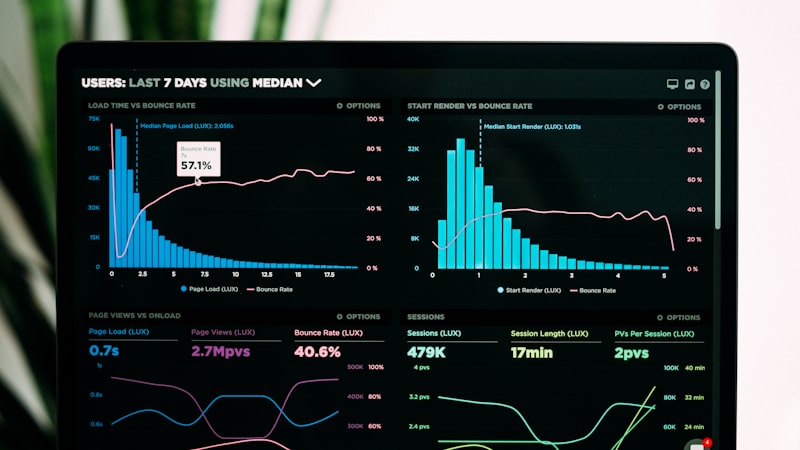
Here's something I've learned from analyzing thousands of transaction logs: bounce rate is one of the worst metrics to optimize for. Everyone stares at it obsessively. "We have a 40% bounce rate!" they say, panicking.
But bounce rate doesn't tell you *why* people left. A visitor who bounces in 3 seconds because they realized the product isn't what they want is different from someone who bounces at 45 seconds because your page took forever to load. Yet both show up as bounces.
Instead, focus on:
Share this post
Related Posts
Need technology consulting?
The Idflow team is always ready to support your digital transformation journey.
1Time to purchase decision — Measure from landing to cart addition. If this is increasing, something's wrong with your product communication, not your checkout.
1Comparison engagement — How many times do visitors compare products before deciding? High comparison rates with low conversion suggests price credibility issues.
1Payment failure rates — Most businesses don't track this. You could be converting perfectly but losing 8-12% of transactions at payment processing. I once helped a client discover their payment gateway was returning cryptic error messages that felt like rejections to customers.
1Post-purchase email open rates — Sounds random, but high open rates on order confirmations indicate satisfaction. Low rates suggest buyers are doubting their decision immediately after purchase.
The Checkout Paradox: More Fields or Fewer Fields?
Everyone preaches "minimize form fields." Industry wisdom says fewer fields = higher conversion. Sounds logical, right?
Then I worked with a fashion e-commerce brand in Ho Chi Minh City that added three additional fields to their checkout: preferred delivery day, gift message, and size fit preference. Their conversion rate went up 1.8%.
Why? Because those extra fields actually solved problems customers had. The delivery day preference meant they didn't need to be home waiting. The gift message made it feel more personal. The fit preference showed expertise and reduced return rates by 12%.
The real insight: every field should answer a customer's actual concern, not the merchant's preference. A field that reduces post-purchase anxiety is worth its weight in gold. A field that's just there for your database is friction.
The 80/20 Rule Nobody Follows
I'll be direct: 80% of your conversion rate optimization wins come from things that have nothing to do with your website design. They're upstream.
Product-market fit: If you're selling something nobody wants, no button color will save you.
Traffic quality: A hundred visitors from a targeted paid campaign are worth a thousand from random Facebook clicks. But most teams spend all their CRO energy on the 1,000.
Product photography: For e-commerce, particularly in Vietnam where photo quality is improving rapidly, bad product images are conversion killers. One brand I worked with improved images and gained 2.1% conversion lift without touching the website.
Trust signals: In markets with lower e-commerce maturity, security badges, customer reviews, and return policies matter disproportionately more.
The Tools That Actually Drive Results
People ask me what tool I use for CRO. The answer surprises them: it's not fancy. Hotjar or Clarity for session recording, Google Analytics 4 (if configured correctly, which most brands don't do), and Excel for hypothesis tracking.
The tool doesn't matter. The discipline matters. You need systematic hypothesis testing, not "let's change the call-to-action and see what happens."
Here's what works:
- State hypothesis clearly before testing
- Test one variable at a time (don't do multiple changes simultaneously)
- Run tests to statistical significance, not gut feeling
- Track fails as aggressively as wins
Most brands run 50 A/B tests a year and see 2-3 winners. That's not optimism. That's either poor hypothesis generation or a sign you're optimizing the wrong elements.
Vietnam E-Commerce: The Specific Advantage You're Overlooking
Vietnamese e-commerce is at an interesting inflection point. We have massive adoption (40+ million online shoppers), but many brands still haven't mastered localization beyond translation.
Conversion optimization here requires understanding:
Mobile dominance: 85% of e-commerce traffic is mobile. Not responsive design—true mobile-first design. Fat thumbs, small screens, limited data.
Localized payment methods: Beyond COD, installment payments (through Kredivo, GCash-style services) are conversion drivers many platforms haven't integrated.
Social proof specificity: "1000 people bought this" isn't as compelling as "500 people in Ho Chi Minh City bought this this week."
The Honest Truth About Marginal Gains
A 0.5% conversion rate improvement sounds small. In absolute terms, if you're doing $1M in monthly revenue, that's $5,000 in additional sales.
But here's what conversion rate optimization actually is: endless marginal improvements that eventually compound. You don't go from 1% to 5% with one brilliant insight. You get there through 47 small wins stacked on top of each other.
The problem is sustainability and attribution. When win #27 is a font size change that lifts conversion by 0.2%, nobody notices. Nobody celebrates it. People want the 3% jump from a redesign, even if statistically that 3% is just noise plus placebo.
I've learned to make peace with boring. The best CRO work looks invisible.
---
At Idflow Technology, we help brands run this whole system—from understanding your actual customer psychology to testing systematically without the noise. Because optimization isn't about being clever. It's about being patient and empirical with your traffic.