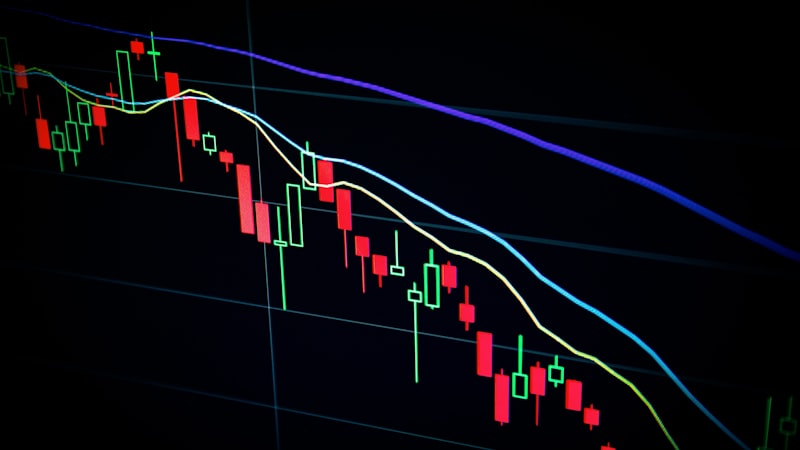
A friend called me in 2019, excited about some cryptocurrency pattern they'd spotted. They'd built a quick LSTM model, trained it on historical data, and made a prediction: Ethereum would hit $2,000 within months. It seemed obvious when you saw it on the chart. Two months later, they'd lost most of their capital chasing that signal.
That conversation stuck with me, and it perfectly encapsulates the gap between what machine learning *can* do and what it *should* do when applied to markets. The model wasn't broken—it was doing exactly what it was trained for. The real problem was downstream: a trained technician confusing pattern recognition with prediction.
The Uncomfortable Truth About ML and Markets
Here's what nobody wants to admit: machine learning is phenomenal at finding historical correlations, but markets actively exploit and destroy predictable patterns the moment they become widely known. It's evolutionary. In 2015, detecting sentiment shifts from financial news was profitable. Today? By the time your model identifies the pattern, institutional traders with lower-latency systems have already arbitraged it away.
This doesn't mean ML is useless for market work—it absolutely isn't. But it means the game has changed dramatically from what most tutorials suggest. The real value isn't in building the "perfect predictor." It's in understanding asymmetric information, time decay, and context-specific advantages.
Where ML Actually Works: Not Where You Think
The practitioners making real money with ML in markets aren't building models that predict tomorrow's closing price. That's a fantasy. Instead, they're using ML for:
1. Microstructure Analysis
Understanding order flow patterns, market maker behavior, and liquidity dynamics at sub-second scales. This requires XGBoost or neural networks trained on order book data, not closing prices. The signal strength here degrades quickly, but if your infrastructure can act within milliseconds, it's still viable.
Share this post
Related Posts
Need technology consulting?
The Idflow team is always ready to support your digital transformation journey.
2. Factor Engineering at Scale
Traditional quants use 5-10 carefully crafted factors. ML lets you test 5,000. But here's the insider move: the best results come from combining domain expertise with ML feature selection, not letting algorithms loose unsupervised. A random forest might discover that "days since earnings announcement × intraday volatility × sector momentum" matters more than simple momentum. That insight is gold. The coefficient? That's just one data point.
3. Regime Detection
Markets aren't stationary. Volatility regimes, correlation structures, and return distributions shift. Models trained on 2015 data will fail in 2023. The sharp practitioners use clustering algorithms (GMMs, k-means variants) to detect when the market has fundamentally changed, then retrain or switch strategies accordingly. This is unglamorous but absolutely necessary.
Vietnam's Emerging Opportunity (and Pitfall)
The Vietnamese market presents an interesting case study. With a growing fintech ecosystem and companies like Techcombank, VietcomBank, and newer players like Bamboo Capital beginning to explore algorithmic trading, there's been a rush to apply ML techniques that work in mature markets like the US or Hong Kong.
Here's the reality: Vietnam's market is still partially driven by behavioral inefficiencies and information asymmetries that don't exist in developed markets. ML models trained on US S&P 500 data fail spectacularly when applied to the VN-Index because the underlying dynamics are fundamentally different.
The real advantage for Vietnamese analysts? You can still build meaningful signals from social media sentiment, analyst recommendations, and retail investor positioning—not because you have a better model, but because price discovery is still incomplete. That window won't stay open forever.
The Tools, Honestly
Most people ask about TensorFlow, PyTorch, or specialized platforms. Here's what actually matters:
XGBoost still outperforms neural networks on tabular market data 70% of the time. It's boring, well-understood, and resistant to overfitting. Use it first.
LightGBM is faster and often better for high-dimensional data—especially useful when you're feature-engineering at scale.
PyMC or Stan for Bayesian approaches if you want to incorporate domain priors and uncertainty quantification properly. This is underrated in practice.
Ray or Dask for distributed backtesting across thousands of parameter combinations without melting your laptop.
The secret that separates professionals from hobbyists: proper backtesting infrastructure. Your model could be brilliant, but if your backtest contains look-ahead bias, overfitting, or unrealistic slippage assumptions, you're deluding yourself. Most retail traders fail here, not in model design.
The Unsaid Cost of Data Quality
Raw market data is noisy, corrupted, and often incomplete. Adjusting for splits and dividends is trivial. Handling delisting events, examining whether volume numbers are real or artifacts of circuit breakers—that's where 60% of your time goes. I've seen models that generated brilliant predictions repeatedly fail because nobody caught that their data vendor had introduced a systematic lag in one instrument's timestamps.
If you're buying data, validate it ruthlessly. If you're building your own pipeline, assume it's broken until proven otherwise.
The Honest Conclusion
Machine learning for market prediction isn't dead, but it's evolved. You're not predicting tomorrow—you're identifying pockets of temporary inefficiency before they close, understanding how market regimes shift, and automating pattern detection across thousands of variables that humans can't track.
The models that work are usually domain-specific, heavily engineered, and leverage real competitive advantages (better data, faster execution, or deeper market expertise). They're not published on Medium. They're not the focus of exciting startup pitches.
If you're just starting here, focus on understanding the market itself first. Build a model second. Most smart traders I know spend 80% of their time on market microstructure and domain knowledge, 20% on actual ML techniques. Get that ratio backward and you'll join my friend in 2019, staring at a beautiful chart pattern that wasn't beautiful enough.
At Idflow Technology, we've helped teams implement proper data pipelines and backtesting frameworks for fintech applications. The work isn't glamorous, but getting the infrastructure right is what separates predictions that work in theory from those that work with real capital.