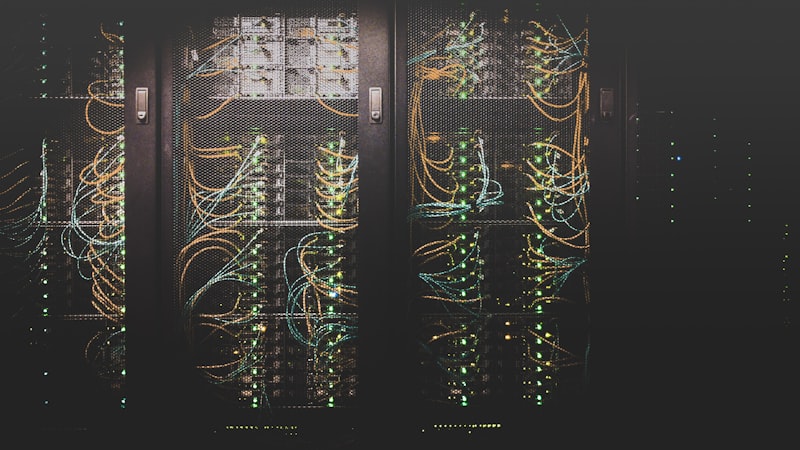
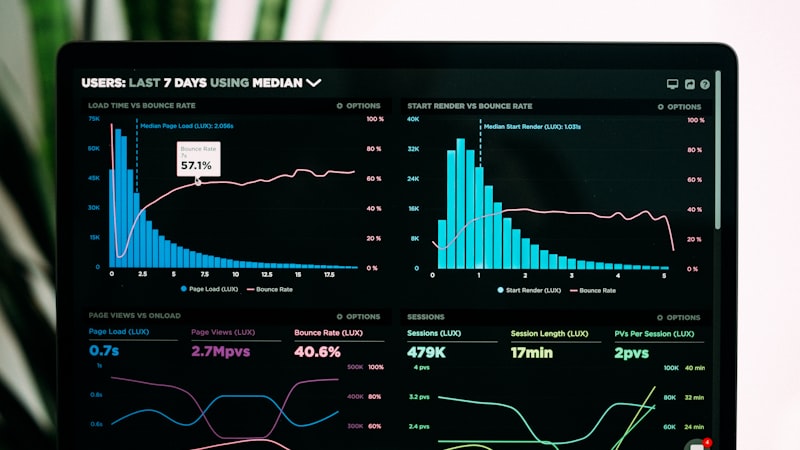
I still remember the day our payment system nearly collapsed. It was 3 AM on a Friday—because of course it was—and our order processing team got paged because refunds were stuck in limbo while new orders kept flooding in. The root cause? A monolithic service that tried to do everything synchronously: take payment, update inventory, send confirmation emails, notify warehouse systems, all in a single HTTP request. One slow database query, and the entire pipeline backed up like rush-hour traffic on the Hanoi-Hue Highway.
That moment taught me why event-driven architecture isn't just another buzzword. It's about decoupling the components of your system so they can breathe, fail independently, and scale intelligently.
What Event-Driven Architecture Actually Is
Let me be honest: the term gets thrown around so much that people think it means anything involving events. But there's a meaningful distinction. Event-driven architecture is a design pattern where services communicate by emitting and consuming events, rather than making direct calls to each other. When something important happens in your system—a user signs up, an order is placed, a payment fails—you emit an event. Other services that care about that event react to it, independently and asynchronously.
Think of it like a pub/sub model at the architectural level. Services don't directly depend on each other; they depend on the event stream. This is radically different from the traditional request-response pattern where Service A calls Service B, waits for an answer, and continues. In event-driven systems, Service A publishes that something happened and moves on. Service B picks it up whenever it's ready.
The beauty? Service B doesn't even need to exist when Service A emits the event. You can add new consumers later without touching the original publisher.
The Real Advantages (Beyond the Marketing Slide)
Decoupling is not just a nice-to-have—it's about operational sanity. In traditional architectures, you get cascading failures. The warehouse system is slow? Your entire order flow slows down. The email service is down? Orders can't complete. In event-driven systems, your order service publishes the event and moves forward. The warehouse service consumes it when it's ready. The email service comes online later and catches up. Your system remains responsive.
Share this post
Related Posts
Need technology consulting?
The Idflow team is always ready to support your digital transformation journey.
I worked with a Vietnamese e-commerce startup last year that had a synchronized payment-inventory system. During the Tet sales period, when traffic spiked 40x, everything crashed. After moving to event-driven architecture with Apache Kafka, they handled 10x higher concurrency without adding proportional infrastructure. Events just queued up; services consumed them at their own pace. No more cascading failures.
Scalability becomes more rational. Each service can scale independently based on its actual load. Your order service might handle 100k events/second, but your analytics service only needs to process 1k/second. You can't force them into the same scaling pattern when they're tightly coupled. Events let each component size itself appropriately.
Resilience gets built in naturally. If a service goes down temporarily, events accumulate in your message broker. When it comes back online, it catches up. We're talking about Kafka here (LinkedIn's event streaming platform used by thousands of companies), RabbitMQ, AWS Kinesis, or similar systems that guarantee durability. Google Pub/Sub, which powers much of Google's infrastructure, is fundamentally event-driven.
Auditability becomes automatic. Your event log is a complete record of what happened in your system. This is invaluable for debugging, compliance, and root cause analysis. You can replay events to understand how your system got into a particular state.
The Real Challenges (That Nobody Talks About)
Here's where the pitch usually stops and reality begins.
Complexity skyrockets. You've traded straightforward request-response complexity for distributed systems complexity. Now you're dealing with eventually consistent data. If your inventory service updates 5 seconds after your order service confirms the purchase, you need to handle the gap. Your system must be idempotent—if the same event gets processed twice, it shouldn't create duplicate orders or charge customers twice.
Debugging becomes a nightmare. A user's order failed somewhere in your pipeline. Was it the payment service? The warehouse notification? Some combination? In a monolith, you have one stack trace. In an event-driven system, you're tracing through asynchronous logs across multiple services. You need serious observability infrastructure—structured logging, distributed tracing, monitoring. This isn't optional.
Data consistency gets philosophical. You can't guarantee that all your systems have the same view of the data at the same moment. You need to embrace eventual consistency, which means your UI might show stale information temporarily. Most businesses can tolerate this, but some can't.
When to Actually Use It
Event-driven architecture isn't universally superior. It's powerful for systems with:
High throughput requirements where decoupling prevents bottlenecks
Complex event flows where many services need to react to business events
Independent scaling needs where different components have different load patterns
Multiple consuming systems that need flexibility to be added/removed
Don't use it if you have a simple CRUD application with straightforward dependencies. You'll add tremendous operational complexity for no gain.
The Practical Implementation Reality
In practice, most successful implementations are hybrid. Your core transaction might still be synchronous for consistency (we want to know immediately if payment failed), but notifications, analytics, inventory updates, all propagate asynchronously through events. RabbitMQ and Kafka dominate this space because they've solved the hard problems: durability, reordering, scaling, delivery guarantees.
The financial services industry basically runs on this. Your bank transfer initiates a synchronous transaction but triggers dozens of asynchronous events for compliance, fraud detection, notifications, and accounting.
Vietnam's Growing Adoption
Interestingly, Vietnamese startups are catching on faster than expected. Companies like Tiki, Grab's Vietnam operations, and others handling massive transaction volumes have moved to event-driven systems. The infrastructure is there now—AWS SQS, Google Cloud Pub/Sub, managed Kafka services—removing the barrier of setting up your own message broker.
The Bottom Line
Event-driven architecture is powerful because it maps to how real systems actually operate: independently, asynchronously, at their own pace. It's not a silver bullet, and it introduces real complexity. But for systems at scale, it's often not a choice—it's a necessity.
At Idflow Technology, we help organizations think through these architectural decisions from the ground up. Whether you're building a simple service or orchestrating complex workflows across distributed systems, the right architecture at the right time is what separates systems that scale from systems that crash at 3 AM on a Friday.