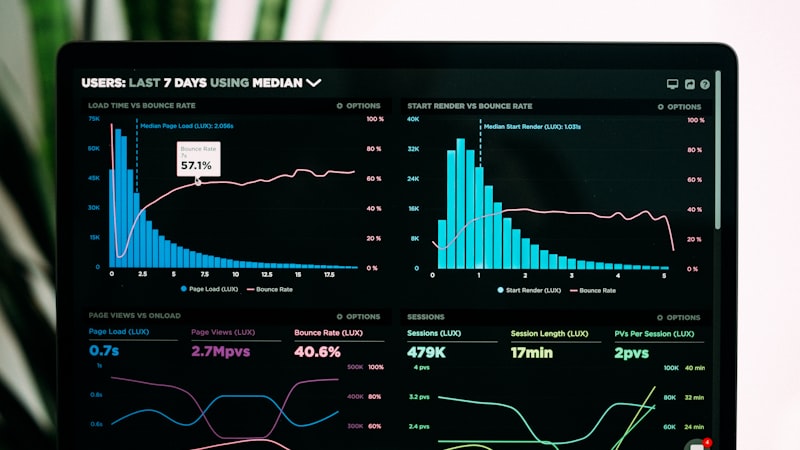
I remember the day a startup founder called me at 11 PM, voice shaking. Their application had just crashed—not because of traffic spikes (they wished), but because a single query was taking 47 seconds and locking their entire database. They were doing $50K in monthly revenue, and every minute of downtime cost them real money. The irony? They'd optimized their API response times down to 200ms. Nobody told them the database was the bottleneck.
This story plays out differently in Vietnamese tech companies every single week. We've got young, ambitious startups scaling fast without thinking about database architecture, then suddenly hitting walls that cost them millions in lost business and expensive emergency refactoring. It's preventable. Most of it, anyway.
The Real Cost of Ignoring Database Design
Here's what keeps me awake: 75% of application performance problems trace back to the database, not the code. Not the frontend. Not the API logic. The database.
Yet we celebrate solving 100ms of API latency with microservices and caching layers, while running queries that scan 10 million rows every time someone loads their dashboard. It's like buying a Ferrari with a broken fuel pump.
Database design isn't about being a perfectionist. It's about understanding the difference between a system that works today and one that works at 10x scale without rewriting everything.
What Nobody Tells You About Schema Design
The default approach most developers take—normalizing everything into separate tables because "it's the right way"—works great until it doesn't. I've seen systems at major Vietnamese e-commerce platforms run queries joining 7 tables just to fetch a user's order history. Each join added 30-40ms latency. Multiply that by thousands of concurrent requests, and you're melting your database.
The dirty secret? Sometimes denormalization is the right answer. Counterintuitive, I know. But storing a calculated total_order_value on the order record itself might be "wrong" by database theory textbooks—and absolutely correct for your business. The textbooks were written by academics, not people debugging production at 3 AM.
Share this post
Related Posts
Need technology consulting?
The Idflow team is always ready to support your digital transformation journey.
Here's what matters more than perfect normalization:
Understanding your query patterns first. Not theoretically. Not what you think users will do. What they actually do, measured in production. If 99% of your queries filter orders by user_id, and you're splitting user data across multiple tables, you're fighting physics. Your indexes can only help so much.
Choosing the right tool for the right job. PostgreSQL is a powerhouse for relational data, but I've seen it struggle with document-heavy workloads where MongoDB would shine. The Vietnamese fintech space, in particular, is heavily relational—banking transactions, customer records, KYC data all fit traditional schemas beautifully. But if you're building a product recommendation engine? You might want something different.
Indexing: The Art Behind the Science
Bad indexing is simultaneously the easiest problem to create and the hardest to diagnose. A missing index can slow your system by 100x. An unused index wastes 5GB of memory you didn't know you didn't have.
The principle I follow: index what you filter and join on, not what you hope might help. Index the columns in your WHERE clauses and JOIN conditions. Not the columns that seem important.
But here's the thing everyone learns the hard way—index size matters. A database with 47 indexes on a table that should have 5 will spend more time maintaining those indexes during writes than it spends using them for reads. I've tuned systems where removing 30 unused indexes improved write performance by 35%.
One metric that changed how I think about indexing: index cardinality. If you're indexing a boolean column with a million rows, you're splitting that data into two buckets—roughly 500K each. That index barely helps. A composite index on (user_id, created_at) might have millions of unique combinations and could be perfect for your queries.
Connection Pooling and the Myth of Infinite Scaling
Here's a technical detail that causes production incidents across Vietnam's startup scene at least monthly: every database connection consumes memory. PostgreSQL defaults to 6MB per connection. MongoDB defaults to even more.
If you're running your application without connection pooling—passing database connections directly from your app servers—you've already lost. Create 100 servers, each opening 10 connections, and you're trying to maintain 1,000 simultaneous connections on your database. Most databases start struggling around 200-500 active connections.
Connection pooling (using PgBouncer, Redis, or built-in connection pools in your ORM) reduces this to maybe 20-30 real database connections while handling hundreds from the application. The math works. The performance jump is dramatic—we're talking 40-50% reduction in latency on high-traffic systems.
Replication and the Recovery Nobody Plans For
Database replication isn't just for read scaling—it's your insurance policy. And most teams don't have insurance.
Replication lag, which I call "the silent killer," happens when your replica falls behind your primary database. Writes go to the primary instantly, but replication takes time—maybe 500ms, maybe 5 seconds depending on network and query volume. If users can read from replicas, they might see data that contradicts what they just wrote. That's business logic breaking in production.
The Vietnamese payments and banking sector learned this lesson hard. When you're processing transactions, stale reads are catastrophic. You need either synchronous replication (slower writes, guaranteed consistency) or application logic that avoids reading from replicas for critical data (more complex code).
The Boring Stuff That Prevents Disasters
Monitoring feels unsexy until your database runs out of disk space at 2 AM and the entire system goes down because nobody was watching. Set up alerts for:
Disk usage above 80%
Query performance degradation
Replication lag beyond your threshold
Long-running queries that lock tables
Connection pool exhaustion
Real numbers from real incidents: I've seen Datadog costs run $3,000+ monthly just to avoid what would've cost $50K in downtime. That's a bargain nobody complains about later.
Building for Tomorrow, Not Yesterday
The tempting mistake is designing for today's traffic. You've got 100 users, so you normalize everything, skip caching, skip read replicas, and declare victory.
Then you get successful. Now you've got 10,000 users. Your database that was fine at 100 users is drowning at 10,000, and you can't easily add read replicas because your application wasn't designed to read from multiple database instances. This is the story of many Vietnamese startups that grew too fast and too unprepared.
Design for 10x your current load without overthinking it. Add indexing strategy early. Plan your replication approach before you need it. Keep your schema flexible enough to evolve without complete migrations.
At Idflow Technology, we've helped dozens of growing companies rethink their database architecture before it became a crisis. The difference between a startup that scales elegantly and one that rebuilds its entire data layer at 3x revenue usually comes down to decisions made at 1x.