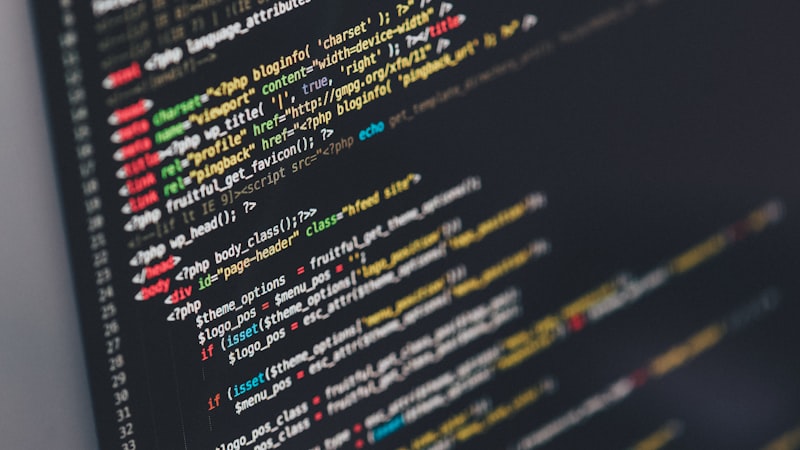
I once inherited a codebase where a single function was 3,000 lines long. Three thousand. The function was aptly named processData(), which told you absolutely nothing about what it actually did. When I asked the previous developer why, he said: "It worked, didn't it?" He wasn't wrong. The system ran. It made money. But every time someone needed to add a feature or fix a bug, they'd spend three days just understanding what that monster function did.
That project taught me something most junior developers learn the hard way: code isn't written for computers—it's written for humans. The computer doesn't care if your variable is named x or processOrderPaymentStatus. But your teammates, your future self, and the poor junior developer who inherits this code in 2027 definitely will.
The Real Cost of Messy Code
Here's the uncomfortable truth that nobody talks about in computer science courses: poor code quality costs Vietnamese companies an estimated 15-20% of their annual development budget in rework and bugs. I'm not making that up. Studies from various tech consultancies have shown that about 25-30% of a developer's time in large enterprises goes to understanding and fixing code written by others.
Think about that. If you're paying a senior developer 2,000 USD per month (fairly standard in Ho Chi Minh City tech scene), and they spend 7.5 hours per week untangling legacy code just to fix a simple bug, you're burning through 15,000 USD yearly on that one person alone. Multiply that across a team of ten developers.
Clean code isn't about perfectionism. It's about economic efficiency.
What Actually Makes Code "Clean"?
Most developers think clean code means "no warnings in the linter" or "follows the style guide." That's hygiene, not cleanliness. The difference is important.
Real clean code has these characteristics:
Share this post
Related Posts
Need technology consulting?
The Idflow team is always ready to support your digital transformation journey.
1. It tells a story. When I read the code, I should understand not just *what* it does, but *why* it exists. This is why naming is absurdly important. I once saw a variable called tempVal. Temp for what? It was neither temporary nor a value—it was a user's age threshold for eligibility checks. Naming it minimumAgeForSubscription would have saved someone an hour of head-scratching.
2. It respects the single responsibility principle—but realistically. Not every function needs to do one and only one thing in the philosophical sense. Rather, it should have one *reason to change*. If your function handles both API validation and database persistence, it has two reasons to change. That's too many. But if it orchestrates both in a clear sequence? That's often fine.
3. It's skeptical of cleverness. I've seen developers write code that would win code golf competitions. A one-liner that does three regex transformations and combines them with a reduce function. It's clever. It's also unmaintainable. Six months later, the person who needs to add a feature can't figure it out without reaching for Stack Overflow.
The best code I've ever seen was often embarrassingly simple. It had four-line functions, explicit variable names, and zero "magic." It looked boring. It was, in fact, beautiful.
The Vietnam Context
Southeast Asian tech companies have a specific challenge here: rapid hiring and high turnover. I've worked with teams in Vietnam where the entire backend squad might turn over every 18-24 months. When that happens, clean code isn't a nice-to-have—it's survival.
I watched a fintech startup in Hanoi lose three weeks of velocity because critical business logic was scattered across eight files with no clear naming convention. When the developer who built it left, nobody could confidently ship features. They had to do an emergency refactor while maintaining production systems. That was expensive and avoidable.
The teams that handle turnover best? They treat clean code as a hiring and retention tool. New developers ramp up 40% faster on codebases that are well-organized, properly named, and follow consistent patterns. They feel confident. They ship faster. They stay longer.
Practical Deep Dives
Comments are a smell. If you're writing long comment blocks explaining what the code does, the code probably isn't clear enough. The exception: *why* something is done in a non-obvious way. "We iterate backwards because the API requires descending order" is helpful. "Loop through array" is not.
Tests are the ultimate code critic. Code that's hard to test is code that's poorly structured. If you're mocking twelve dependencies just to test one function, that function knows too much about the world. This is the secret signal that experienced engineers use: testability is a proxy for good architecture.
Refactoring isn't cleanup work—it's maintenance. Too many teams treat refactoring as something you do when you have spare time, which is never. But refactoring is how you prevent code from becoming the 3,000-line monster I mentioned earlier. Small, constant refactorings—extracting methods, renaming variables, splitting files—prevent debt from accumulating.
The Tooling Misconception
Developers often think clean code requires fancy tooling: ESLint, Prettier, SonarQube, the works. Those help, but they're not sufficient. I've seen projects with perfect linter scores and unreadable code. The tools catch surface-level issues, not structural problems.
What actually matters is readability standards that are internalized by the team. Everyone needs to agree on what clean looks like and genuinely care about it. That's cultural, not technical.
The Hard Truth
Clean code takes more time upfront. You'll write fewer features. Your sprint velocity looks slower. Then, after six months, something magical happens: your velocity starts increasing because you're not fighting the codebase anymore. You're writing features, not fixing the consequences of past shortcuts.
The companies that understand this outcompete those that don't. It's that simple.
---
At Idflow Technology, we build software that needs to last. We've learned that the difference between projects that scale and projects that collapse under their own weight isn't complexity or technology choices—it's code quality discipline. Every developer we work with understands that clean code is the foundation for everything else that matters: reliability, speed, and the ability to evolve without catastrophe.
Write code like someone else will maintain it. Because they will.