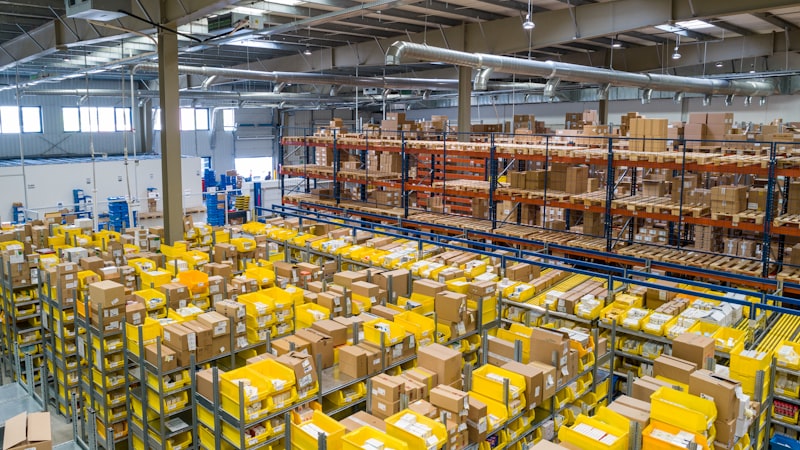
Last year, I watched a factory manager in Ho Chi Minh City lose sleep over 200 pallets of fabric stuck in a warehouse. The supplier shipped them six days early—good news on the surface, right? Wrong. His production line wasn't ready, his warehouse was already at 94% capacity, and storing those pallets early cost him $8,000 in demurrage fees and forced rescheduling of three other shipments. He had no visibility into the supplier's timeline and no system smart enough to predict and smooth the incoming flow. This is the unglamorous reality of supply chains that nobody talks about at conferences.
The fantasy version of AI in supply chain goes like this: you plug in your data, some magical algorithm runs, and suddenly everything is optimized. The reality? It's messier, more interesting, and honestly, more valuable.
Everyone leads with the same statistic: supply chain inefficiencies cost companies 8-15% of revenue. That's true, but it misses the real story. The companies winning in 2024 aren't doing AI for optimization; they're doing it for visibility and responsiveness.
Consider this: a traditional demand forecast gives you a single number—"we predict selling 1,000 units next quarter." An AI-powered forecast gives you probability distributions, scenario planning, and early warning signals when actual demand starts diverging from predictions. That's not just incrementally better; it's a different product entirely.
I've seen supply chain teams at Vietnamese electronics manufacturers use ML models to predict component shortage risks 60 days before they happen—not with magic, but by analyzing supplier health metrics, geopolitical news sentiment, port congestion data, and historical patterns simultaneously. One company identified that a key IC manufacturer was having yield problems based on publicly available defect data analysis before the announcement went official. They had already sourced alternatives. Their competitors didn't.
The Tools Actually Making a Difference
Let's skip the vendor slide shows and talk about what actually works. Demand sensing platforms like Kinaxis and Coupa use machine learning to blend POS data, social media signals, weather data, and promotional calendars into real-time demand signals. The Vietnamese beverage industry discovered that Instagram trends could predict demand shifts three weeks out—Kinaxis's platform caught that pattern automatically. That's the kind of insight that feels magical until you realize it's just systematic pattern matching at scale.
Share this post
Related Posts
Need technology consulting?
The Idflow team is always ready to support your digital transformation journey.
Network optimization engines are where things get interesting. They solve variants of traveling salesman problems, but with hundreds of constraints: vehicle capacity, time windows, fuel costs, traffic patterns, environmental regulations (which Vietnam just tightened on emissions). A medium-sized FMCG company in Da Nang reduced last-mile delivery costs by 23% in six months by switching from rule-based routing to AI-optimized routing with OSRM and custom ML models layered on top. The "secret" wasn't one breakthrough—it was finding hundreds of micro-inefficiencies that humans never catch.
Inventory optimization is where AI moves from helpful to essential. Most companies still use variants of the EOQ (Economic Order Quantity) formula from 1913. It assumes constant demand, stable lead times, and knows nothing about seasonality, supply disruptions, or cash flow constraints. Modern ML-based inventory systems (like the approaches used by Wayfair or Alibaba's supply chain teams) model demand as probabilistic, factor in multiple cost dimensions, and rebalance continuously. A manufacturer in Ho Chi Minh City cut safety stock by 31% while improving fill rates from 91% to 97% using a custom Bayesian network that captured the dependencies between their suppliers, production lines, and retail partners.
The Uncomfortable Truths Nobody Mentions
First: AI is terrible at black swan events. Your beautiful demand forecast will be worthless during a pandemic or a geopolitical shock. What it's actually good at is everything *else*—the 99% of normal operations where patterns hold. Smart organizations don't replace human judgment during crises; they use AI to free up human bandwidth to *focus on* crises.
Second: Data quality will destroy your project. I've seen six-month, $400K initiatives fail because nobody had standardized product SKU definitions across the ERP, and the demand signal was meaningless noise. Fix your data before you build your model. This is boring but critical.
Third: The biggest wins often come from optimizing cross-functional dynamics, not individual functions. A factory can optimize its production schedule perfectly, but if purchasing doesn't understand it and keeps buying on spot prices, you've gained nothing. The companies seeing the best results have broken down silos and built AI systems that force alignment—demand planning, procurement, operations, and finance all optimizing the same goal, not their own local objectives.
Vietnam's Supply Chain Moment
The Vietnamese supply chain is at an inflection point. Labor costs are rising, but skilled talent isn't. Brands are diversifying away from pure China dependence (looking at electronics, footwear, textiles). That means Vietnamese manufacturers need to operate at a different efficiency level to compete. AI isn't optional—it's how they keep margins healthy while scaling responsiveness to multinational customers who demand 48-hour lead times and traceability.
I've watched factories implement real-time visibility using IoT sensors and edge ML inference to track component flows on the shop floor. Doesn't sound glamorous, but one semiconductor assembly operation reduced cycle time by 8% just by identifying where parts were bottlenecking using computer vision on their existing security cameras. No new hardware. Just smarter pattern recognition applied to existing data.
The Practical Starting Point
If you're considering supply chain AI, don't start with the sexiest problem. Start with the most painful one that has good data. Maybe it's forecast accuracy. Maybe it's last-mile routing. Maybe it's inventory write-offs. Pick something where you can measure the impact clearly and show value in 4-6 months. That builds credibility for the bigger, harder projects.
Build your case on real numbers: hours saved, percentage improvement, actual money returned to the business. Avoid phrases like "digital transformation" and "industry 4.0." They mean nothing to operations leaders who care about whether they ship on time and whether their costs are down.
The companies that are really winning at supply chain AI aren't the ones with the fanciest algorithms. They're the ones with the discipline to start simple, measure everything, and iterate. They've embedded data literacy into their operations teams so that the right people can interpret what the models are telling them.
---
This is ultimately why organizations like Idflow Technology matter—they're focused on making AI supply chain tools practical and tuned to local contexts. The best platform in the world doesn't help if it doesn't speak your language, understand your regulatory environment, or integrate with the ERP system you're already stuck with. Real supply chain optimization happens when the tech gets out of the way and the business intelligence becomes actionable.